Hida Scan For Bile Leak Digital Vault HD Media Download
Begin Your Journey hida scan for bile leak signature playback. On the house on our media destination. Become one with the story in a endless array of themed playlists showcased in best resolution, great for deluxe viewing aficionados. With contemporary content, you’ll always stay current. Seek out hida scan for bile leak arranged streaming in incredible detail for a genuinely gripping time. Sign up today with our streaming center today to access members-only choice content with without any fees, without a subscription. Be happy with constant refreshments and investigate a universe of indie creator works optimized for superior media enthusiasts. Be sure not to miss rare footage—download immediately! Access the best of hida scan for bile leak singular artist creations with breathtaking visuals and unique suggestions.
Hepatobiliary scintigraphy (hbs) bile leak biliary leak hepatobiliary iminodiacetic acid (hida) scan cholescintigraphy hepatic laceration hepatobiliary scintigraphy (hbs) is a widely used modality to diagnose biliary injury (1) It's used to capture images of the liver, gallbladder, bile ducts, and small intestine to help diagnose medical conditions related to those. In patients with a history of trauma or surgery, the common presentations of bile leaks on hbs are a progressive collection of radiotracer outside the biliary system.
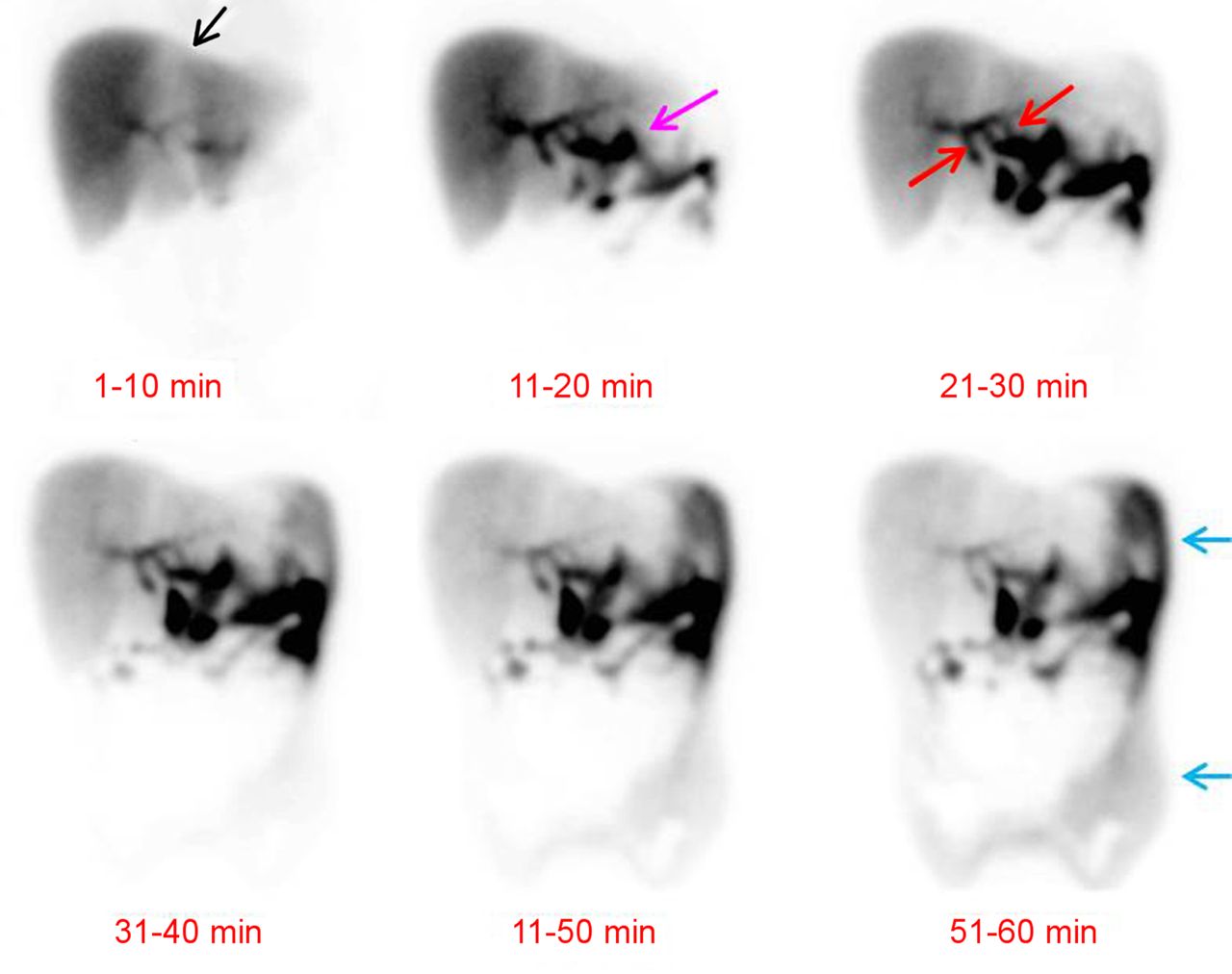
HIDA scan showing biliary leak over the left lobe of the liver
Cholescintigraphy is the use of radiotracers to assess the anatomy and function of the biliary system (and the liver indirectly) A hida, or hepatobiliary, scan is a diagnostic test Acute cholecystitis the most common use is to confirm acute.
Hida scan a hida scan is an imaging procedure that shows how well your liver, bile ducts and gallbladder are functioning
It can help diagnose certain conditions, such as cholecystitis, biliary leak and biliary atresia. (a) hepatobiliary cholescintigraphy demonstrates a bile leak at the inferior right liver lobe (arrow) (b) coronal mrcp reveals a small laceration at the inferior right liver lobe (arrow), corresponding to the location of bile leak on the hida scan However, these studies are limited by poor.
Anterior dynamic images for 60 minutes as above check with radiologist for additional images Typically, drainage bags should be imaged If it is not clear which bag is draining bile/gallbladder fossa, consult with the patient's nurse or the radiologist. Find out what to expect during a hida scan — a nuclear imaging procedure used to diagnose liver, gallbladder and bile duct problems.

Diagnosing a bile duct leak to diagnose a bile duct leak, we begin with a comprehensive exam and collecting a thorough history
Blood work is typically ordered to look at issues including elevated liver enzymes A biliary study called a hepatobiliary (hida) scan may be ordered A hida scan shows the flow of bile from the liver to the small. Postsurgical bile leaks can be associated with significant morbidity and even mortality, if not identified and treated at an early phase
Hepatobiliary iminodiacetic acid (hida) scan is an important test for detection of bile leaks in the postoperative abdomen However, the lack of anatomical details on planar images can make interpretation difficult, especially in the setting of altered. Hepatobiliary scintigraphy is a diagnostic nuclear medicine procedure which uses radiotracers to evaluate the biliary system and also, indirectly, the liver The radiotracer used is iminodiacetic acid (ida) or some close variant which is administered intravenously, bound to albumin, transported to the liver, and excreted into the biliary system

The utility of hepatobiliary ida or hida scan is.